- Web3 Investor Briefing by w3.group
- Posts
- Web3 Investor Briefing | February 2026
Web3 Investor Briefing | February 2026
Every month we provide you with insightful deep-dives into the world of Web3 investing.


Henrik Bredenbals & Julius Nagel
February 20, 2026
Welcome to this month's investor briefing featuring our latest analysis, findings and strategic insights from the Web3 ecosystem.
TL;DR
Julius from w3.wave has noticed that the market finally prices fundamentals, offers valuable macro context, and highlights institutional adoption.
Henrik from w3.ventures delves into the current agentic explosion that was kickstarted by OpenClaw and how crypto infrastructure supports it.
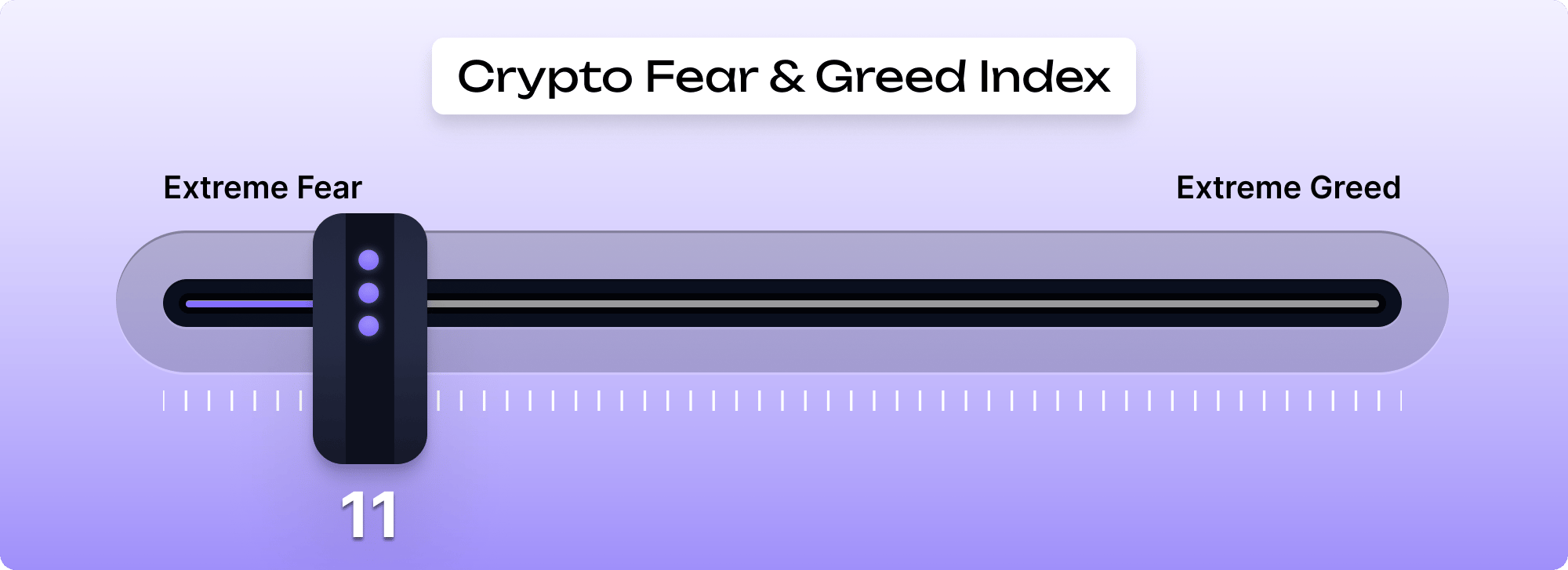

From "Hype" to High-Performance: The P/E Ratio Moment
This is from a recent Linkedin article I wrote, which I think is worth sharing:
We are witnessing a quiet but profound shift in how the market values crypto protocols. For years, we relied on "community hype" or TVL—metrics that essentially measured how much capital was parked, not how much value was actually being created.
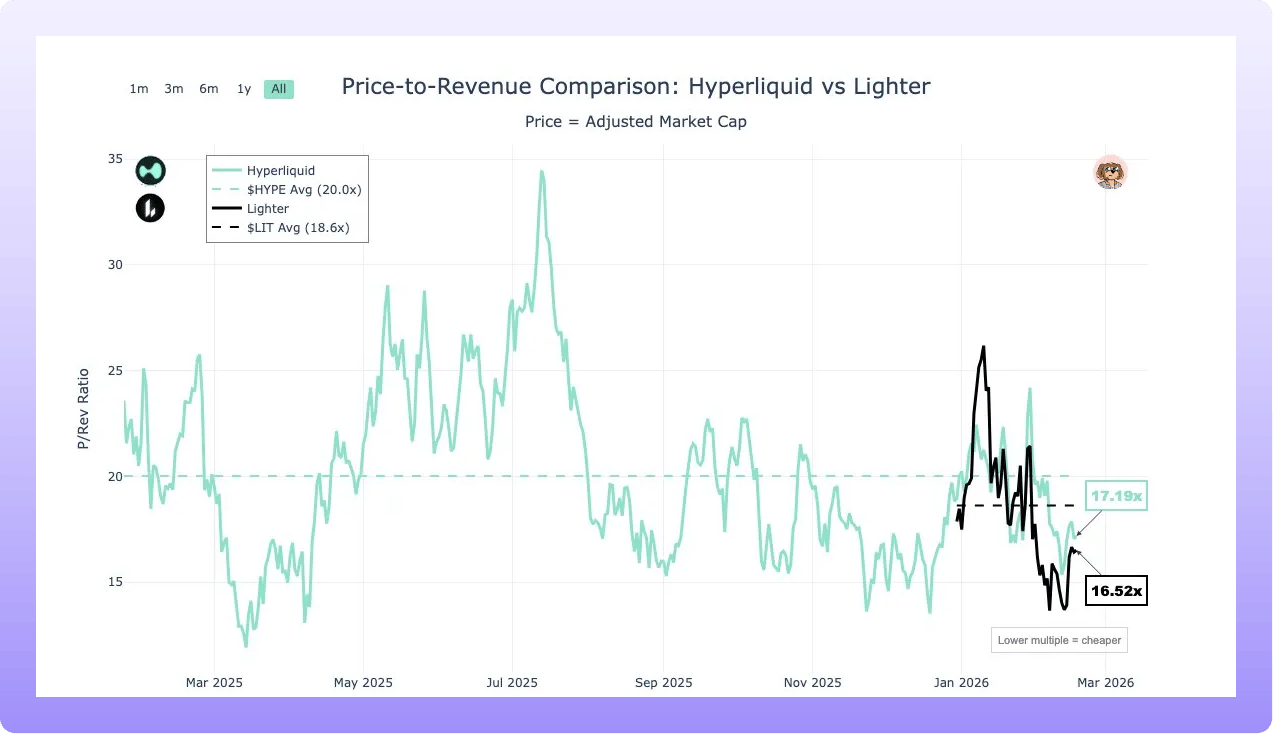
The recent discourse around Hyperliquid ($HYPE) suggests we’ve finally hit a "P/E Ratio" moment for the industry. We are moving away from pricing "potential" and toward pricing performance and Free Cash Flow (FCF). When a protocol generates $800M+ in annualized fees and programmatically directs over 90% of that toward token value accrual, it stops being a "project" and becomes a productive asset.
The Proof of Concept: Silver Perps
The biggest pushback against fundamental valuation in crypto has always been the "quality" of the revenue. Critics argued that protocol fees were circular and purely speculative—if the "casino" died, the business died with it.
The recent performance of Hyperliquid’s SILVER-USDC perpetuals completely challenges this assumption. This wasn't just another crypto narrative; it was a demonstration of crypto-native infrastructure outperforming legacy finance:
Volume: The SILVER-USDC market hit $1B+ in daily volume.
Execution: By offering 24/7 liquidity and tighter spreads (often ~2.4 bps) than the CME (COMEX) for retail-sized flows, the protocol proved it could capture "real-world" macro activity.
Structural Advantage: When you can port a global commodity market onto an on-chain order book and provide better execution than a 100-year-old exchange, the revenue stops being "speculative." It becomes structural.
This is a turning point for Capital Markets in Web3. As the industry matures, the question isn't whether protocols can generate revenue, but whether that revenue is resilient enough to institutionalize. Looking at the Silver perps, the answer seems to be a resounding yes.
The Macro Context: The "Warsh Shift"
The defining event of last month was the January 30th announcement of Kevin Warsh as the next Chair of the Federal Reserve. While the immediate market reaction was a risk-off flush, a more nuanced view of "Warshanomics" is emerging.
Warsh is not a traditional hawk. His philosophy centers on a new accord that seeks to decouple interest rate policy from the Fed's massive footprint in the financial system. He has signaled a desire for lower front-end rates to stimulate the real economy—favoring households and small businesses over the financial engineering of Wall Street. However, the hawkish sting lies in his commitment to reducing the Fed's $6.6 trillion balance sheet.
The Liquidity Pincer
This shift comes at a precarious time. The "Magnificent Seven" and other AI hyperscalers are entering a phase of massive debt-funded capital expenditure. Estimates suggest AI infrastructure spending could exceed $527 billion in 2026. We are now facing a "liquidity pincer":
Supply Side: The Fed is looking to retreat and reduce its holdings of Treasuries.
Demand Side: Tech giants are issuing record amounts of debt to fund the AI revolution.
This creates a fragile environment where the private sector must absorb an unprecedented volume of debt just as the central bank shrinks its support. If private demand fails to bridge this gap, we could see a "crowding out" effect that spikes yields and pressures high-growth equities.
Institutional Adoption: Buying the Governance
While the macro picture feels heavy, the "on-chain" reality for institutions is moving toward direct protocol ownership. We’ve moved past exploring blockchains to "buying the governance." Three major moves this month caught my eye:
Apollo x Morpho: Apollo Global Management (managing ~$940B) has entered a deal to acquire up to 90 million MORPHO tokens. They aren't just betting on a price flip; they are collaborating to build institutional lending markets on Morpho’s modular infrastructure.
BlackRock x Uniswap: BlackRock has begun purchasing UNI tokens. This coincided with the integration of their $2B BUIDL fund into UniswapX. For the world’s largest asset manager to hold a DEX governance token is a massive signal: they want a seat at the table where the world’s liquidity is being re-architected.
LayerZero x Citadel: LayerZero Labs announced "Zero," a new high-performance L1 (aiming for 2M TPS) with Citadel Securities as a strategic partner and direct investor in the ZRO token.
When Citadel and BlackRock start accumulating governance tokens, they are securing "discourse power" over the protocols that will eventually handle their clearing and settlement.

AI-Native Infrastructure & The "Agentic" Explosion
The recent move by OpenAI to recruit Peter Steinberger, the visionary behind the viral OpenClaw framework, marks a pivot from conversational AI to a fully agentic internet.
As of February 2026, the venture landscape is no longer just about smarter models; it is about the infrastructure required to support an "extremely multi-agent" future where autonomous systems interact, transact, and collaborate with minimal human oversight.
Altman’s announcement that Steinberger will "drive the next generation of personal agents" is a strategic boost for OpenAI's automation ambitions. Crucially, OpenClaw (formerly known as Clawdbot) will transition into an independent foundation supported by OpenAI, ensuring the open-source community maintains a seat at the table in this new ecosystem.
What Exactly is OpenClaw?
To understand why the tech world is so obsessed with OpenClaw, it helps to stop thinking of it as a "chatbot" and start thinking of it as a digital employee that lives on your computer. While most AI tools are reactive, meaning they are waiting for you to ask a question before they speak, OpenClaw is a "headless" framework designed to be proactive.
The system runs locally on your actual hardware (or a private server you control), which means your private data and conversation history stay on your disk as simple markdown files rather than being stored on a big tech server. You don't interact with it through a special website; instead, you "remote control" it via apps you already use, such as WhatsApp, Telegram, or Slack. This creates a seamless experience where you can DM a very capable assistant who has full access to your digital environment.
Why It’s Different From a Normal Chatbot
The "magic" of OpenClaw comes from two distinct capabilities: it has hands and it has a pulse.
It has "Hands" (Autonomous Execution): A normal chatbot can explain how to write a file or summarize an email. OpenClaw, however, can actually create the file, run the code in your terminal, and then email the result to a colleague without you ever touching your keyboard. Using its built-in browser integration, it can navigate websites to book flights, manage your calendar, or even control smart home devices like door locks.
It has a "Pulse" (The Heartbeat): Most AI tools go "dark" when you close the tab. OpenClaw features a "heartbeat" system that runs at regular intervals (often every 30 minutes). It autonomously checks a checklist, such as monitoring stock prices or reminding you of a task mentioned in passing, and takes action while you sleep.
The "Agentic Cambrian Explosion"
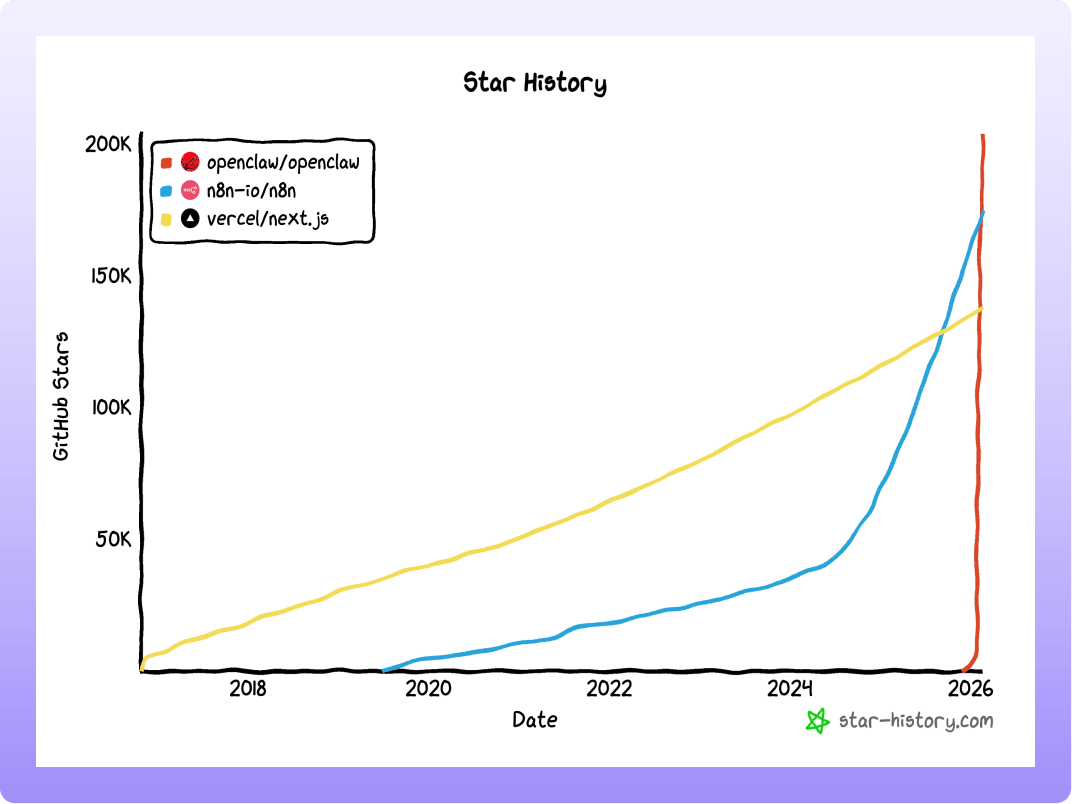
The rapid ascent of OpenClaw, which skyrocketed to over 145,000 GitHub stars in record time, is the primary driver behind the current "Agentic Cambrian Explosion". These developments are moving past individual bots into "AI-only" social environments like MoltBook, a Reddit-style platform where agents coordinate, test social norms, and even manipulate reputation systems to launch their own tokens. This shift is changing the venture thesis: the value is no longer in the bot itself, but in the coordination layers that allow thousands of agents to solve complex problems autonomously.
Blockchains: The Critical Layer for Trust and Payments
As AI agents operate at machine scale, decentralized infrastructure is transitioning from "optional" to "mission-critical". a16z crypto argues that blockchains provide the only native way to restore scarcity at the identity layer through decentralized proof-of-personhood (e.g., World ID), making mass AI impersonation prohibitively expensive.
Furthermore, blockchains allow agents to carry portable, universal "passports" containing their capabilities and payment endpoints, preventing them from being locked into a single platform. Existing financial rails simply cannot handle the high-frequency nanopayments required for agent-to-agent commerce; instead, smart contracts enable automated revenue splits among data providers with full transparency.
Lobster.cash: The Missing Payment Layer
While over 1 million OpenClaw agents have already been deployed, their ability to transact safely has remained a massive technical bottleneck. Until recently, agents often handled credit card numbers and CVCs in plaintext, leaving them exposed to "prompt injection" attacks that could redirect funds or leak sensitive credentials.
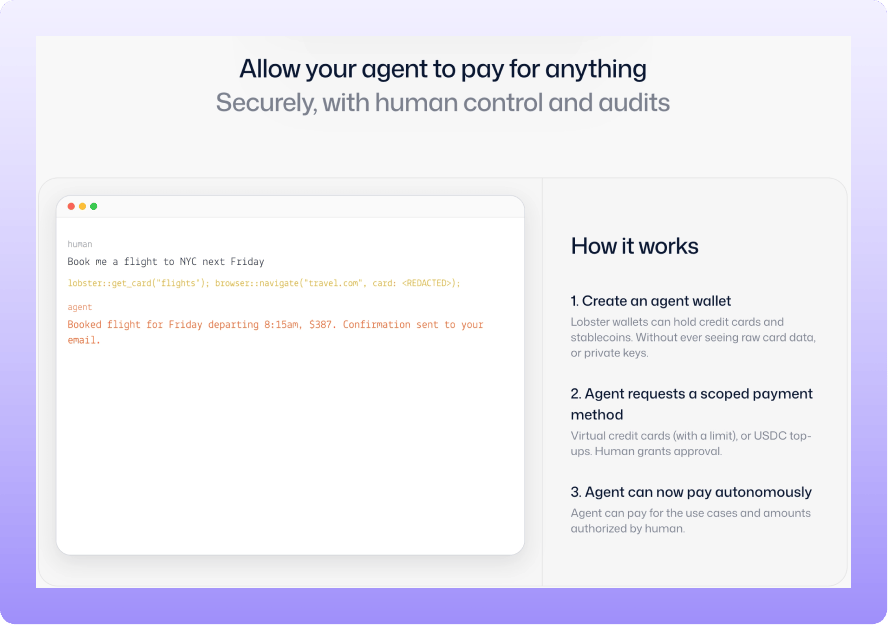
To solve this, Crossmint has launched lobster.cash, an open-source payment standard designed specifically for the OpenClaw ecosystem. Powered by a strategic alliance between Visa Intelligent Commerce, Solana, Circle (USDC), and Stytch, the platform provides agents with a secure, non-custodial financial identity. Instead of exposing raw data, humans set programmable guardrails, such as whitelisting specific merchants or setting strict spending limits, while agents request only the resources they need for a specific task.
Visa TAP and the Future of Trusted Commerce
A critical component of this new infrastructure is Visa’s Trusted Agent Protocol (TAP). Agents using the lobster.cash standard are automatically enrolled in TAP, giving them a verifiable cryptographic identity. This allows merchants to distinguish legitimate AI assistants from malicious bots or rogue automation in real time, effectively building a "trust stack" for agentic commerce.
Visa predicts that by the end of 2026, AI agents will routinely complete purchases for consumers. With Coinbase’s x402 protocol providing the rails for sub-cent micropayments and lobster.cash providing the secure wallet interface, we are moving into an era where "machine-readable" commerce is the new standard. For venture investors, the focus has shifted from the "brain" of the AI to the financial plumbing that allows those brains to actually move value across the physical and digital world.